Securing the accident scene – warning triangle and your own safety
How to secure an accident scene without putting yourself in danger.
When you are first to arrive at an accident, it is tempting to run straight over to help. But securing the accident scene correctly is first and foremost about preventing a second accident. Your own safety always comes before everything else, because an injured helper cannot help anyone. Here you will learn how to place the warning triangle, when to wear a hi-vis vest, and how to make the scene safe before you move on to alerting the emergency services and giving first aid.
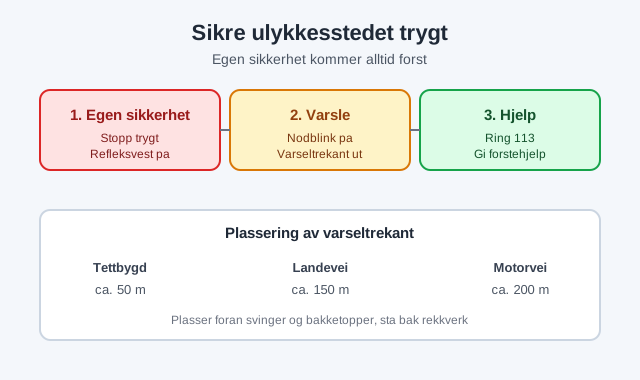
Table of contents
- Your own safety comes first
- How to secure the scene step by step
- Placing the warning triangle
- Hi-vis vest and visibility
- Common mistakes
Your own safety comes first
The first principle at an accident scene is simple: protect yourself before you protect others. Stop the car in a safe place, preferably a good distance behind the accident and off the carriageway. Switch on the hazard lights immediately so following traffic understands that something is wrong. Put on your hi-vis vest inside the car, before you open the door and step out.
Assess the hazards on the scene before moving around freely: passing traffic, a slippery road surface, fuel on the asphalt, smoke or live electrical cables. If a car is stuck in a lane on a motorway, it is often safest to stay behind the barrier and warn from there. Your duty to stop and help is real, but it applies without putting your own life at unnecessary risk. You can read more about this in the article on duties after a traffic accident .
How to secure the scene step by step
Follow a fixed order so you do not forget anything under stress:
- Stop safely some distance behind the accident, off the carriageway
- Switch on the hazard lights immediately
- Put on the hi-vis vest before you leave the car
- Get out on the side facing away from traffic
- Place the warning triangle at a good distance behind the scene
- Gain an overview and alert the emergency services on 113
Only once the scene is secured do you move on to giving help. See the step-by-step walkthrough in first aid at a traffic accident . Using hazard lights and the warning triangle is also explained thoroughly in the article on hazard lights and the warning triangle .
Placing the warning triangle
The warning triangle should give following traffic enough time to spot the danger and brake. The higher the speed at the scene, the further back the triangle must stand. Place it before bends and crests, not after, so it becomes visible in good time.
| Road type | Distance behind the scene | Tips |
|---|---|---|
| Built-up area | approx. 50 m | Place before junctions and bends |
| Rural road | approx. 150 m | Ensure a clear line of sight to the triangle |
| Motorway | approx. 200 m | Walk behind the barrier, never in a lane |
The distances are guidelines and should be increased in high speed, poor visibility or darkness. If you will later pass a secured accident scene yourself, it is useful to know how to behave correctly when passing an accident scene .
Hi-vis vest and visibility
Visibility is what separates a safe helper from a second accident. You should therefore:
- Put on the hi-vis vest before you leave the car, not afterwards
- Make sure all passengers who get out are wearing a vest
- Use a torch in the dark both to be seen and to see injuries
- Position yourself so you never have your back to traffic
It pays to keep the equipment ready and easy to reach. An overview of what the car should carry can be found in the article on emergency equipment in the car . Remember too that fatigue and poor judgement increase the risk of mistakes in a stressful situation – read more about fatigue and microsleep .
Common mistakes
- Running straight to the injured without securing the scene
- Forgetting the hi-vis vest or putting it on too late
- Placing the warning triangle too close to the accident
- Setting the triangle after a bend instead of before it
- Standing with your back to traffic while helping
Practising theory on first aid, alerting and self-protection is an important part of preparing for the class B theory test. Test yourself with a free theory test and keep practising in the Eteo app to be well prepared for the theory test. You can also read about the basic traffic course – contents , where first aid and accident preparedness are central topics.
Next step
Continue with free car questions
Go straight from the article to free car questions and check what actually sticks before you keep reading more theory.
Try for free