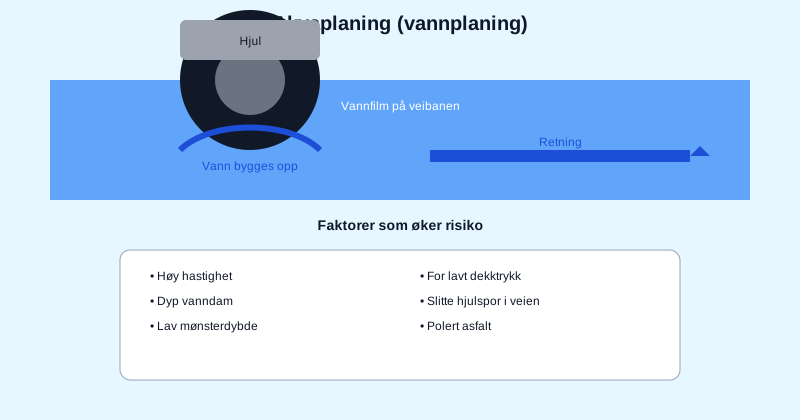
Aquaplaning (hydroplaning) occurs when the tire loses contact with the road because a layer of water builds up under the wheel. The result is a dramatic loss of steering and braking ability.
 For general driving in rain and wet conditions, see Driving in difficult conditions
.
For general driving in rain and wet conditions, see Driving in difficult conditions
.
When does aquaplaning occur?
| Factor | How it affects risk | Action |
|---|
| Speed | High speed increases water pressure ahead of the tire | Reduce speed early |
| Water depth | > 5 mm increases risk markedly | Avoid deep puddles |
| Tread depth | < 3 mm gives high risk | Replace tires in time |
| Tire pressure | Too low pressure increases risk | Adjust to correct pressure |
| Road profile | Ruts, polished asphalt, crossfall | Stay in established wheel tracks |
Critical speed (simple rule of thumb)
| Tread depth | Water depth | Critical speed |
|---|
| 7–8 mm | 3–4 mm | 90–100 km/h |
| 4–5 mm | 3–4 mm | 70–80 km/h |
| 3 mm | 5 mm | 55–65 km/h |
| 2 mm | 5 mm | 45–55 km/h |
| Values vary with tire design, vehicle weight and pressure. Treat as guidance, not absolutes. | | |
How to prevent aquaplaning
- Reduce speed by 20–30% in heavy rain
- Increase following distance substantially
- Follow established wheel tracks
- Avoid abrupt maneuvers and large steering inputs
- Check tread depth and tire pressure regularly
- Replace wiper blades often for maximum visibility
For distance planning in rain, see Speed and distance
.
What to do if you hydroplane
- Hold the wheel straight and steady
- Ease off the throttle gently
- Do not brake hard and do not steer sharply
- Wait until grip returns before adjusting course or speed
Tire checkpoints
| Item | Minimum | Recommended |
|---|
| Tread depth | 1.6 mm legal minimum | 3–4 mm summer, 4 mm winter |
| Tire pressure | Manufacturer spec | +0.2 bar with heavy load |
| Rotation | Even wear | Swap front/rear every 10,000 km |
| See also Rules for tires and chains
. | | |
| Read more about pressure and monitoring in Tire pressure and TPMS
. | | |
Related articles