Police signals and manual traffic control
Understand when to follow the police instead of traffic lights, and which signals mean stop, wait or go.
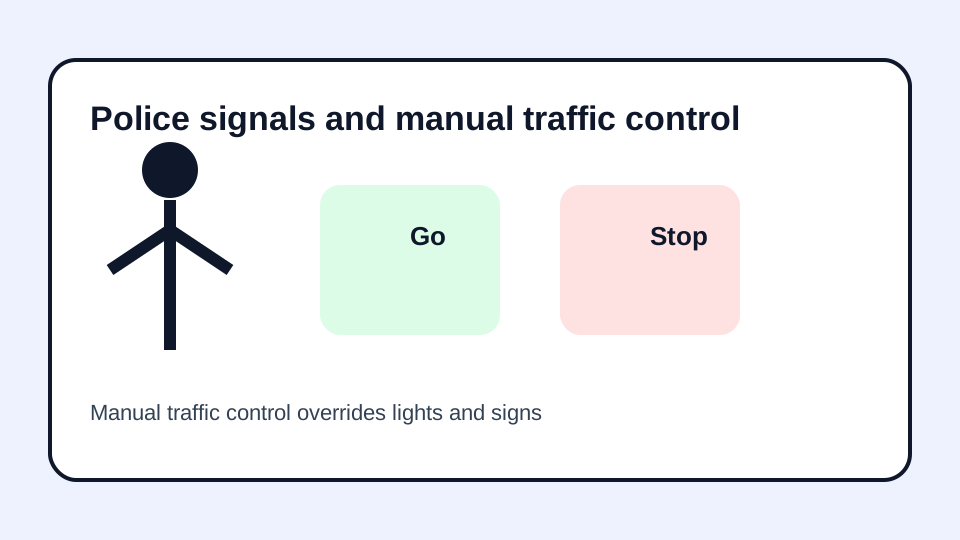
When the police direct traffic, their signals take priority. You will mainly meet this after collisions, power failures, large events and roadworks. Read this together with Signals vs directions in traffic and The traffic system - lights so you see the full priority chain in one place.
Order of priority
| Control method | When it applies | What you do |
|---|---|---|
| Police signals | When traffic is directed manually | Follow the signal, not the light |
| Traffic lights | When the system works and nobody is directing traffic | Follow red, amber and green as normal |
| Traffic signs | When lights do not give instructions | Read yield, stop and prohibition signs |
| General rules | When nothing else controls the situation | Apply the right-hand rule and general care |
Common police signals
| Signal | Meaning | Your action |
|---|---|---|
| Police officer facing you from the front or back | Stop | Stop before the stop line or intersection |
| Police officer showing a side to you | Free passage | Drive if the lane ahead is clear |
| One arm raised straight up | Everyone must stop | Brake in a controlled way and wait |
| Waving movement forward | Move forward | Keep a low speed and confirm that crossings are clear |
How to solve typical situations
- You have a green light, but the police officer raises an arm. Then you must stop because manual control overrides the signal.
- You have a red light, but the police officer waves you forward. Then you may drive when the intersection and crossing are clear.
- You meet flashing amber and police in the road. Read the body position and hand signals before you interpret the signs.
What the examiner looks for
- That you know the order of priority without hesitating
- That you understand the difference between police signals and your own signals such as indicators
- That you never drive into an intersection you cannot clear
Common mistakes
- Staring at the traffic light instead of at the police officer
- Thinking a green light automatically gives you priority
- Overlooking pedestrians when you are waved forward