Yellow lines and temporary road markings
A short guide to yellow lines and temporary road markings, including when they are used, how they override permanent markings and common mistakes.
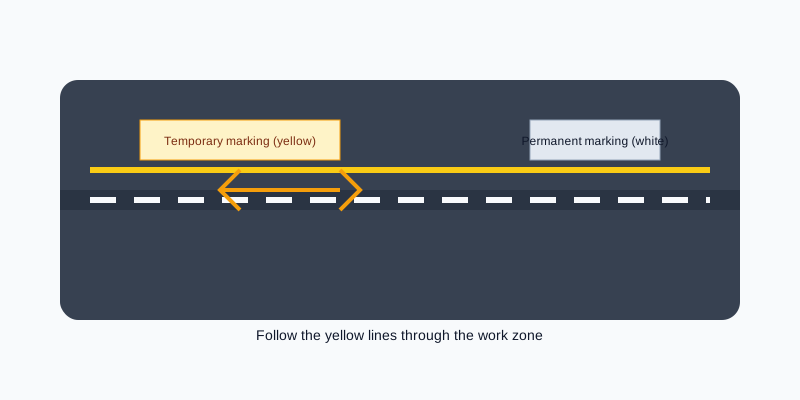
Temporary road markings are used to guide traffic safely when the road is changed by roadworks, accidents or diversions. If you see yellow lines and arrows, those are the markings you must follow through the work zone. For the full picture, see Roadworks warning and temporary signage and Road markings .
When are temporary markings used?
- During roadworks and lane narrowing
- For temporary diversions or changed traffic patterns
- When the permanent markings are temporarily unsuitable or misleading
- At temporary intersections or changed lane selection points
How to prioritise correctly
- Always follow manual control, lights and signs first
- Temporary road markings govern lanes and direction inside the work zone
- Permanent white markings apply again once the work zone ends
Yellow lines in practice
| Situation | What you see | What you should do |
|---|---|---|
| Lane narrowing | Yellow arrows and lines moving the lane sideways | Position yourself early, keep a steady speed and leave a large gap |
| Temporary centre line | Yellow centre line drawn over white | Follow the yellow line and avoid sudden corrections |
| Hatched-off area | Yellow hatching and cones | Do not drive into the area; follow the guided lane |
| Temporary stop line | Yellow stop line at an intersection | Stop at the yellow line and look for signals |
Typical situations you need to understand
Narrowing and merge points
Lanes can disappear quickly. Use the zipper method and keep distance. See Merging and queue driving .
Changed lane choice
Yellow arrows can change where you need to position yourself before an intersection. Signal early and check your mirrors. See Road signs and lane choice .
Narrow work zones
Drive calmly and steadily, and avoid unnecessary lane changes. Also read Defensive driving .
Checklist before and through the work zone
- Reduce speed early and read the signs in good time
- Follow yellow lines and arrows through the entire work area
- Keep extra distance and be ready to stop
- Use indicators early when lanes change
- Watch for workers and machinery at the roadside
Common mistakes
| Mistake | Risk | Correct choice |
|---|---|---|
| Following the old white markings | Wrong lane and dangerous late lane changes | Follow the yellow lines consistently |
| Changing lanes in the last second | Sudden braking and queue disruption | Position yourself early |
| Driving too fast | Less reaction time | Keep a low, steady speed through the zone |
| Ignoring arrows and hatched areas | Entering a closed lane | Look far ahead and use mirrors actively |