Lane arrows on the road – choose the right lane
How to read the arrows on the road and choose the right lane before a junction.
Lane arrows are the white arrows painted on the road ahead of junctions, and they tell you which direction each lane leads. If you read the arrows in good time, you reach the right lane before you need to turn – and you avoid dangerous last-second lane changes. This is key knowledge both for the theory test and for practical driving.
Contents
- What the lane arrows mean
- How to read the arrows in good time
- Common arrow combinations
- When the lane is already full or you are in the wrong lane
- How they work with signs and markings
What the lane arrows mean
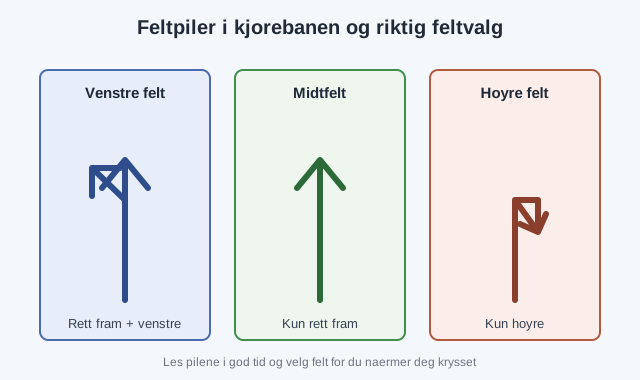
The lane arrows are mandatory road markings that regulate traffic on a par with road signs. An arrow pointing straight ahead means the lane is for driving straight through the junction. An arrow that bends left or right shows that the lane is reserved for that turning movement. Many lanes have combined arrows, for example straight ahead and right in the same lane.
When markings and signs say the same thing, they reinforce each other. When a lane has only a left-pointing arrow, it is a pure turning lane – you are required to turn in the direction the arrow shows. So you cannot continue straight ahead from a lane that has only a left arrow, even if the road ahead is clear.
How to read the arrows in good time
Good planning starts well before the junction itself. Follow this approach:
- Orient yourself early – look for advance warning signs and markings as soon as you approach the junction.
- Decide your direction – if you know you are turning left, aim for the left lane while there is still plenty of time.
- Check the arrows in your lane – do they match where you are going? If not, plan a single safe lane change.
- Position yourself correctly – settle into the lane with the right arrow at a good distance from the stop line.
- Hold your position – once you are in the lane, avoid weaving or switching at the last second.
The earlier you read the arrows, the calmer the lane choice becomes. Stress and time pressure often cause the wrong lane; read more about how stress and time pressure affect the decisions you make behind the wheel.
Common arrow combinations
The table shows the most common arrows you meet on the road and what they require of you:
| Arrow in the lane | Meaning | What you must do |
|---|---|---|
| Straight-ahead arrow | The lane is for driving straight through | Continue straight ahead |
| Left arrow | Pure left-turn lane | You must turn left |
| Right arrow | Pure right-turn lane | You must turn right |
| Straight ahead + right | Lane for both movements | Choose direction, stay in lane |
| Straight ahead + left | Lane for both movements | Choose direction, stay in lane |
Remember that the arrows apply from the point where they appear up to the junction. If the lane changes direction along the way – for example by becoming a pure turning lane – this should normally be warned with several arrows in sequence, so you have time to change. This is closely linked to lane sorting with direction arrows , where arrows govern which lanes lead where.
When the lane is already full or you are in the wrong lane
Even with good planning you can end up in the wrong lane. Then a few clear principles apply:
- Never force your way over solid lines or across queues to reach the right lane.
- If you are in the wrong lane just before the junction, follow the arrow in the lane you are actually in and take another loop rather than creating a dangerous situation.
- If it is free and safe to switch, make a controlled lane change with mirror checks, indicator and blind-spot check in good time.
A lane change requires the same craft as an overtake. Feel free to revise the rules in the article on overtaking and lane changes so you get it right every time.
How they work with signs and markings
The arrows on the road rarely stand alone. They work together with lane signs and lane choice that warn from above or beside the road, and with other road markings . In one-way streets the lane choice is extra important; see how arrows and signs connect in one-way streets and lane choice .
If you get conflicting information, the main rule is that the strictest and most specific regulation governs. In practice this means you follow the markings and signs that are clearest at that moment, and leave a good margin.
Choosing the right lane is something you refine with practice. Test yourself with a free theory test and keep practising in the Eteo app, so you are well prepared for the theory test and confident about the arrows on the road once you are out in traffic.
Next step
Continue with free car questions
Go straight from the article to free car questions and check what actually sticks before you keep reading more theory.
Try for free