Medicines and driving ability – drugs that affect your driving
Which drugs impair driving ability, and what does the warning triangle on the package mean?
Many people only think about alcohol when it comes to impaired driving, but ordinary medicines can also weaken your ability to drive safely. Medicines that affect driving ability can cause drowsiness, reduced reaction time and poorer concentration, often without you clearly noticing it yourself. As a driver you have an independent responsibility to be fit to drive – whether the impairment comes from over-the-counter tablets, prescribed medication or a combination of several drugs.
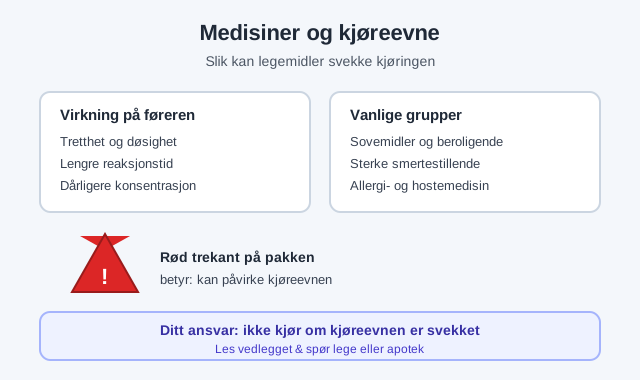
Table of contents
- Why medicines can impair driving ability
- The red warning triangle on the package
- Common drug groups and their effects
- Your responsibility as a driver
- How to drive more safely while on medication
Why medicines can impair driving ability
A safe driver needs good concentration, quick reaction time, clear vision and the ability to judge situations correctly. Many medicines act on the central nervous system and can dampen exactly these functions. The result may be that you become tired, sluggish or get a longer reaction time – which directly affects reaction time and braking distance in a critical situation.
The effect is often strongest when you start a new medicine or change the dose. Your body is not used to the active ingredient, and side effects such as drowsiness or dizziness can come unexpectedly. Combining several medicines, or medicine together with alcohol, can also greatly amplify the effect. This is closely linked to your general fitness to drive .
The red warning triangle on the package
In Norway, medicines that can impair driving ability are marked with a red warning triangle on the packaging. The triangle does not automatically mean that driving is forbidden, but that you must be extra careful: read the package leaflet, and talk to your doctor or pharmacist about how the medicine affects you specifically.
| Mark on the package | What it means | What you should do |
|---|---|---|
| Red triangle | May affect driving ability | Read the leaflet, ask doctor or pharmacist |
| No triangle | Low risk of impairment | Still watch your own reaction |
| Several medicines at once | Possible amplified effect | Have the combination assessed |
Remember that the absence of a triangle is not a guarantee. Over-the-counter remedies, such as certain allergy or cough medicines, can also make you drowsy.
Common drug groups and their effects
Some groups of medicines are especially known for affecting driving:
- Sleeping pills and sedatives – can cause lasting drowsiness, even the day after taking them.
- Strong painkillers (opioids) – dampen both pain and alertness.
- Allergy medicines (older antihistamines) – can have a sedating effect.
- Medicines for anxiety and depression – can change reaction time and attention, especially at first.
- Certain cough and cold remedies – may contain substances that cause tiredness.
The effect varies from person to person and depends on the dose. A medicine that causes clear drowsiness can hit you as hard as alcohol – and the effect can resemble what you experience with sleep and road safety . Be especially careful the day after, a phenomenon many recognise from the topic intoxication the morning after .
Your responsibility as a driver
The Road Traffic Act is clear that you must not drive if you are under the influence of a substance that impairs your driving ability. This also applies to legally prescribed medicines. Even if your doctor gave you the medicine, it is your responsibility to assess whether you are actually able to drive safely right now.
At the same time, there are health requirements for holding a driving licence. With long-term use of certain medicines, a medical assessment may be required. You can read more about this under health and vision requirements . The rules echo why alcohol, blood alcohol limits and drugs are treated strictly: impaired driving endangers both you and others. For older drivers, several medicines and health conditions can interact, which is discussed under older drivers and health .
How to drive more safely while on medication
You do not have to stop driving because you use medicines, but you should take some simple precautions:
- Read the package leaflet and look for the red triangle.
- Ask your doctor or pharmacist how the medicine affects driving and for how long.
- Wait before driving when you start a new medicine and do not know how you react.
- Avoid alcohol together with medicines.
- Consider timing – preferably do not drive right after taking a sedative.
Knowing how your body, health and intoxicants affect driving is an important part of the class B theory. Want to test what you know? Take a free theory test and keep practising in the Eteo app, so you are well prepared for the theory exam.
Next step
Continue with free car questions
Go straight from the article to free car questions and check what actually sticks before you keep reading more theory.
Try for free