Fuel types – petrol, diesel, hybrid and electric
Petrol, diesel, hybrid or electric – how the fuel types differ.
When you choose a car, the fuel type is often what affects both your wallet and the environment the most. Petrol, diesel, hybrid and electric cars each have their own strengths and weaknesses, and the right choice depends on how and how much you drive. In this article we look at the differences in consumption, emissions, cost and use so you can make an informed decision.
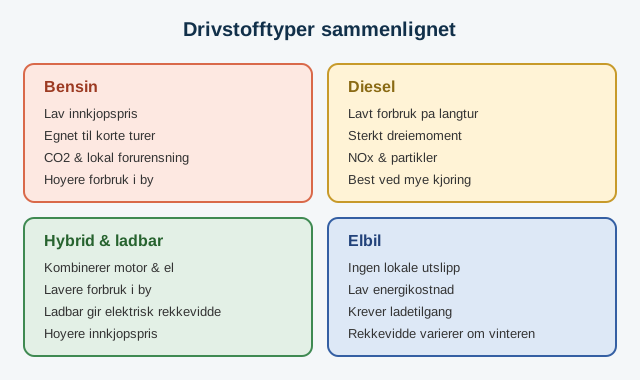
Table of contents
- Petrol
- Diesel
- Hybrid and plug-in hybrid
- Electric car
- How to choose
- Fuel and the environment
Petrol
Petrol cars have traditionally been the most common choice. They have a low purchase price, simple and proven technology, and the engine runs quietly and smoothly. Petrol suits city driving and short trips well, where the engine often does not have time to warm up fully.
The drawback is that petrol gives a relatively high fuel consumption in city traffic with lots of stop-and-go, and that combustion releases CO2 and some local pollution. As a new driver you should be aware that your driving style affects consumption a lot – a steady speed and anticipatory driving saves both fuel and money.
Diesel
Diesel cars use less fuel per kilometre than equivalent petrol cars, especially on longer trips at a steady speed. The diesel engine has strong torque, which makes it well suited to heavy vehicles, lots of loading and driving with a trailer. If you plan to tow a trailer, it is also worth knowing the rules for trailer weight and a class B licence .
In return, diesel is less suited to short city trips, because the cleaning systems work best when the engine is warm. Diesel releases NOx and particulates that can cause local air pollution, and many cities have therefore introduced restrictions. Diesel mainly pays off if you drive a lot and far.
Hybrid and plug-in hybrid
A hybrid car combines a combustion engine with an electric motor. The ordinary hybrid charges the battery itself while driving and braking, and uses the electric motor to reduce city consumption. You do not need to plug it in.
A plug-in hybrid (PHEV) has a larger battery that you charge at home or at a charging station, and it can drive a certain distance on pure electricity before the petrol engine takes over. For a plug-in hybrid to pay off, you actually have to charge it regularly. If you want to understand how these cars work in practice, you can read about PHEV driving modes and charging .
- Hybrid: lower city consumption, no charging, short electric range.
- Plug-in hybrid: can drive purely electric on short trips, but requires charging.
- Both: higher purchase price than pure petrol or diesel cars.
Electric car
An electric car has no combustion engine and produces no local exhaust emissions. The energy cost per kilometre is often low, and the motor delivers immediate torque, which makes the car pleasant to drive. The electric car suits most people who have access to charging at home or at work.
What you must plan for is range and charging. The range drops in cold weather because the battery and heating require energy, so in winter you should expect a shorter range than the stated figure. If you are wondering whether an electric car is right as a first car, you will find good advice in the article on choosing your first car .
How to choose
There is no single right answer – the choice depends on your driving pattern. The table below gives a simplified overview:
| Fuel type | Best suited to | Consumption/energy | Local emissions | Purchase price |
|---|---|---|---|---|
| Petrol | Short trips, city | Medium–high | Yes | Low |
| Diesel | Long-distance, loads, trailer | Low on long trips | NOx and particulates | Medium |
| Hybrid | Mixed driving | Lower in city | Lower | Medium–high |
| Plug-in hybrid | Short daily trips + long trips | Low when charged | Lower | High |
| Electric car | Daily driving with charging access | Low energy cost | None local | Medium–high |
Think about how many kilometres you drive a year, whether the trips are short or long, and whether you can charge. Remember too that the total cost is about more than the purchase price. You can read more about this in the article on running costs and car ownership .
Fuel and the environment
All cars affect the environment, but in different ways. Combustion engines emit greenhouse gases and local pollution, while electric cars move the emissions to the production of electricity and batteries. Whichever car you choose, you can reduce your footprint through eco-friendly driving and a conscious driving style. If you want to go deeper, you can read about emissions and greenhouse gases from cars .
Knowledge of fuel types, emissions and the environment is part of the theory test syllabus. If you want to test what you know, you can take a free theory test and keep practising in the Eteo app so you are well prepared for the theory test.
Next step
Continue with free car questions
Go straight from the article to free car questions and check what actually sticks before you keep reading more theory.
Try for free