Low-emission zones and urban environmental measures
What are low-emission zones, and how do cities manage car traffic?
More and more Norwegian cities are using measures to reduce pollution and congestion from car traffic. A low-emission zone is a defined area in the city where vehicles with high emissions must either pay a charge or are banned entirely during periods of poor air quality. As a class B driver it is useful to understand how these measures work, why they are introduced and how they affect both your wallet and your driving habits.
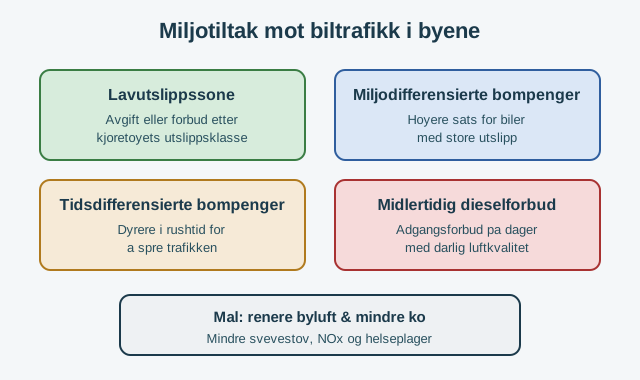
Table of contents
- What is a low-emission zone?
- Why do cities introduce environmental measures?
- Common measures used in cities
- What it means for you as a driver
- How to prepare for the theory test
What is a low-emission zone?
A low-emission zone is a geographic area, often the centre of a larger city, where requirements are placed on the emission level of vehicles. Vehicles are usually grouped by emission class (Euro class), fuel type and weight. Older diesel cars with high emissions of nitrogen oxides (NOx) and particulate matter are hit hardest, while electric cars and modern, clean vehicles pay less or are exempt entirely.
The zones can be permanent with a fixed charge, or they can be activated temporarily on days with especially poor air quality. On such days the municipality may, for example, ban diesel cars in parts of the city. Signs and digital boards announce when a measure is active, and it is the driver’s responsibility to stay informed.
Why do cities introduce environmental measures?
Local air pollution is a genuine health problem, particularly in winter when cold air and little wind cause pollution to settle over the city. The two most important pollutants from traffic are:
- Particulate matter (PM10 and PM2.5): fine particles that come from exhaust, brakes and the wearing of asphalt by studded tyres. You can read more about this in the article on studded tyres and particulate matter .
- Nitrogen dioxide (NO2): a gas that comes mainly from diesel vehicles and can cause respiratory problems.
The aim of the measures is to keep pollution below the national limit values, reduce congestion and make room for more walking, cycling and public transport. You can see the link between driving style and emissions in the article on driving and the environment and in more depth on emissions and greenhouse gases from cars .
Common measures used in cities
Cities have several tools to manage car traffic. The table below gives an overview of the most common ones:
| Measure | How it works | Who is hit most |
|---|---|---|
| Low-emission zone | Charge or ban based on emission class | Older diesel cars |
| Emission-differentiated tolls | Higher toll rate for polluting cars | Diesel and petrol cars |
| Time-differentiated tolls | More expensive at rush hour to spread traffic | All drivers at rush hour |
| Temporary diesel ban | Access ban on days with poor air | Diesel cars without exemption |
| Parking restrictions | Fewer spaces and higher fees in the centre | Anyone parking in the city |
Many cities combine emission-differentiated and time-differentiated tolls, so that an older diesel car pays the most at rush hour. You can read about how the toll system works technically in the article on tolls and AutoPASS . In addition, the municipality may lower the speed limit to reduce noise and particulate matter; this is a separate environmental speed limit .
What it means for you as a driver
As a driver you should be aware of which vehicle you have and where you drive. Some practical advice:
- Check the Euro class and fuel type of your car. Older diesel cars are most exposed to restrictions and high charges.
- Watch for warnings about poor air quality in the city where you drive, especially on cold, windless winter days.
- Consider your tyre choice. Studless winter tyres produce less particulate matter than studded tyres; read more in the comparison of studded versus studless winter tyres .
- Plan your route. Consider public transport, cycling or park-and-ride during periods with strict measures.
Electric cars have long enjoyed benefits in many of these schemes, including lower or no tolls and exemption from certain restrictions. Be aware that the benefits change over time; you will find an overview in the article on electric car benefits and rules .
On the theory test you may encounter questions about why cities introduce such measures, and about the link between emissions, health and air quality. You rarely need to memorise specific rates, but you should understand the principles behind the environmental measures.
How to prepare for the theory test
Environmental measures are part of a larger topic about cars, society and sustainability. To feel confident with the material it pays to practise on varied questions. Take a free theory test and practise regularly in the Eteo app so that you are well prepared for the theory test and understand the link between driving, emissions and the urban environment.
When you understand both the rules and the purpose behind the environmental measures, you become not only a better test candidate but also a more responsible driver in everyday life.
Next step
Continue with free car questions
Go straight from the article to free car questions and check what actually sticks before you keep reading more theory.
Try for free