Stage 2 – basic vehicle handling
Content and goals of stage 2 of class B driver training.
Stage 2 is the second of four stages in class B driver training in Norway. This is where you move from the classroom into the car for the first time. The goal is to learn basic vehicle handling – how the car works technically, and how to operate it safely in quiet surroundings before you meet real traffic in stage 3. The stage ends with a mandatory guidance lesson.
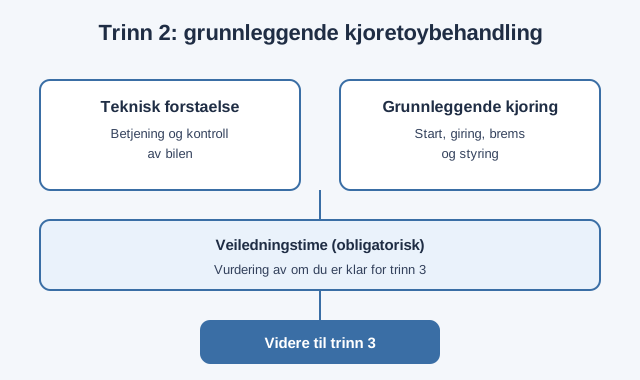
Table of contents
- What is stage 2?
- Goals for stage 2
- Technical understanding of the car
- Basic driving skills
- The guidance lesson
What is stage 2?
Class B driver training is built up in four stages of increasing difficulty. Stage 2 comes after the stage 1 basic traffic course and is about getting to know the vehicle itself. You usually practise on a training area or in quiet residential streets with little traffic, so you can concentrate on operating the car without too many distractions.
Once you have completed the basic traffic course and received your practice-driving permit, you may practise both at a driving school and privately with an accompanying driver. Much of stage 2 can therefore be done as private practice driving, but you must still demonstrate that you have reached the goals before moving on.
Goals for stage 2
After stage 2 you should master the car well enough to direct your attention toward traffic in the next stage. Specifically, you should be able to:
- Explain how the most important systems in the car work
- Adjust your seating position correctly and prepare the car for driving
- Start, change gear, brake and steer smoothly and under control
- Reverse, turn around and park in an open area
- Assess your own driving ability realistically
These goals come from the curriculum for class B and are binding for all approved driving schools.
Technical understanding of the car
An important part of stage 2 is understanding the car as a piece of technical equipment. You learn what to check before driving, and why. This is closely linked to the daily vehicle check you must know both during training and later at the practical test.
| Topic | What you learn |
|---|---|
| Seating and mirrors | Correct distance, rear and side mirrors, head restraint |
| Controls | Pedals, gears, indicators, lights, windscreen wiper |
| Visibility and lights | When to use dipped and main beam, cleaning windows |
| Tyres and brakes | Tread depth, air pressure, how the brakes work |
| Safety equipment | Seat belt, head restraint, warning triangle and reflective vest |
If you choose to practise in a manual car, you spend time on the interplay between clutch and accelerator. To learn more about how the clutch works and wears, clutch wear and clutch technique is useful reading. You can also take the whole training on automatic versus manual transmission .
Basic driving skills
The practical part of stage 2 is about turning the basic manoeuvres into pure routine. You practise until you can perform them without consciously thinking about each separate action – this is called automation. Only when the controls feel natural do you have enough spare capacity to observe traffic safely.
Typical exercises in stage 2:
- Moving off and stopping smoothly and calmly, without jerks
- Changing gear up and down to match speed and engine revs
- Braking under control, both planned and hard
- Steering with the right use of vision far ahead on the road
- Reversing, turning and parking in an open area
These skills form the foundation for the rest of the training. In stage 3 you take them out into varied traffic, and in stage 4 with the safety course on the road everything comes together into independent, safe driving.
The guidance lesson
Stage 2 ends with a mandatory guidance lesson. Here you drive with a driving instructor who assesses whether you have reached the goals of the stage. The lesson is not a test you can fail, but a conversation and assessment of where you stand. Together you agree on what you need to work on more before moving forward.
The purpose is to avoid moving on to more demanding traffic before your basic vehicle handling is in place. A realistic assessment of your own ability is itself a learning goal, and something the examiner also looks for later during the practical test step by step .
Even though stage 2 is practical, it is closely tied to theory. When you understand why the car behaves the way it does, the rules become easier to remember. Test yourself with a free theory test and practise regularly in the Eteo app, so you are well prepared for the theory test alongside your practical training.
Next step
Continue with free car questions
Go straight from the article to free car questions and check what actually sticks before you keep reading more theory.
Try for free