Right of way on a green light – turning at signalised junctions
When you still have to give way even though the light is green at a signalised junction.
Many people believe that a green light means the road is clear and that all other traffic must wait. That is not true. A green light lets you enter the junction, but you can still have to give way to pedestrians and oncoming traffic – especially when you turn. This is one of the most common misunderstandings among new drivers, and a topic that comes up often on the theory test.
In this article we look at when you actually have to give way on a green light, with the main focus on turning left at a signalised junction.
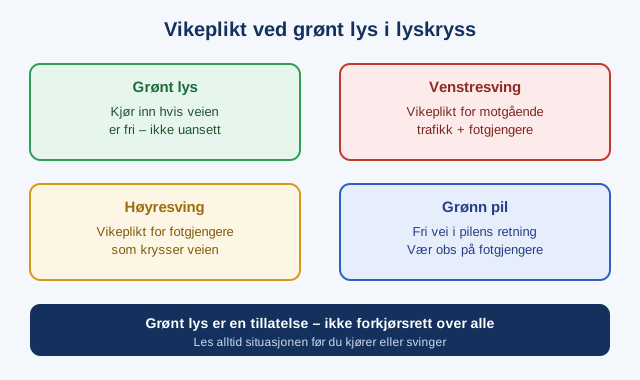
Table of contents
- What a green light really means
- Giving way when turning left
- Giving way to pedestrians when turning right
- Overview table of giving way and the green light
- Common mistakes and how to avoid them
What a green light really means
A traffic signal controls the order in which traffic is allowed to enter the junction, but it does not cancel all give-way rules. A green light means “go if the road is clear”, not “go regardless”. You still have to assess the situation and give way where the rules require it.
The key principles are:
- A green light gives you the right to enter the junction, provided you can do so safely.
- You must give way to pedestrians crossing the road you are turning into.
- You must give way to oncoming traffic when you turn left.
- You must never enter the junction if you would end up blocking it when the light changes.
A plain green light without an arrow therefore only controls who is allowed into the junction – it does not tell you that you have priority over everyone else. For a more thorough walkthrough of how the signals work, you can read about the traffic light signal system .
Giving way when turning left
The classic situation is when you are at the front of the junction with a green light and need to turn left. Then you must give way to all oncoming traffic going straight ahead or turning right, because they also have green and are passing through the junction.
Here is how to do it correctly:
- Move forward into the junction and position yourself to the left within your lane.
- Keep your wheels pointing straight ahead while you wait, so a rear-end collision does not push you into the oncoming lane.
- Wait for a safe gap in the oncoming traffic.
- As you turn, you must additionally give way to pedestrians crossing the road you are turning into.
Remember that you often have to move forward into the junction to be ready to turn when the oncoming traffic clears. You can find more on the technique in the article about turning left at a busy junction .
If instead you get a green arrow pointing left, the oncoming traffic is stopped by a red light and you do not have to give way to them. The arrow gives you a clear road in the direction of the arrow. Read more about the green arrow signal .
Giving way to pedestrians when turning right
When you turn right on a green light, you also have to give way to pedestrians crossing the road you are turning into. The pedestrians often have a green man at the same time as you have green, because they follow the same direction through the junction.
This applies whether or not there is a marked crossing. You therefore have to:
- Check your mirrors and blind spot for cyclists and pedestrians before and during the turn.
- Reduce your speed so you have time to stop if someone is stepping out into the road.
- Pay extra attention to vulnerable road users coming from the right.
The rules for pedestrians at junctions are explained further in the article about pedestrian crossings and right of way .
Overview table of giving way and the green light
| Situation | Signal | Do you give way? | Who do you give way to? |
|---|---|---|---|
| Going straight ahead | Green light | Usually no | Any pedestrians on green |
| Turning left | Green light (no arrow) | Yes | Oncoming traffic + pedestrians |
| Turning left | Green arrow pointing left | No in the arrow’s direction | Still watch for pedestrians |
| Turning right | Green light | Yes | Pedestrians crossing |
| Driving on red | Red light | Stop | You must stand still |
The table shows the main rule: a green light never removes the duty you have to give way to pedestrians, and when turning left you normally also have to give way to oncoming traffic.
Common mistakes and how to avoid them
The typical mistakes come from believing a green light means priority over everyone else:
- Turning left right in front of oncoming traffic because you think “but I have green”.
- Forgetting the pedestrians who have a green man at the same time and cross the road you are turning into.
- Entering a full junction and ending up blocking it when the light changes.
What they all have in common is that the driver trusts the light blindly instead of reading the situation. A green light is a permission, not a guarantee. You will find the same principle of reading who has priority in the general give-way rules in detail and in the examples of give way to the right . If you are turning into a side road, separate rules also apply for giving way when turning into a road .
If you want to practise exactly these situations, you can take a free theory test and keep training in the Eteo app until you feel confident and ready for the class B theory test.
Next step
Continue with free car questions
Go straight from the article to free car questions and check what actually sticks before you keep reading more theory.
Try for free