End-of-restriction signs for speed limits and prohibitions
How end-of-restriction and zone-end signs tell you when a speed limit stops.
An end-of-restriction sign tells you that a speed limit or a prohibition stops applying from the point where you pass the sign. Once you understand how these signs work, you no longer have to be in doubt about which speed or which rules actually apply for the rest of the stretch. This is a topic many learners struggle with on the theory test, because a restriction often ends without a new mandatory sign being placed right afterwards.
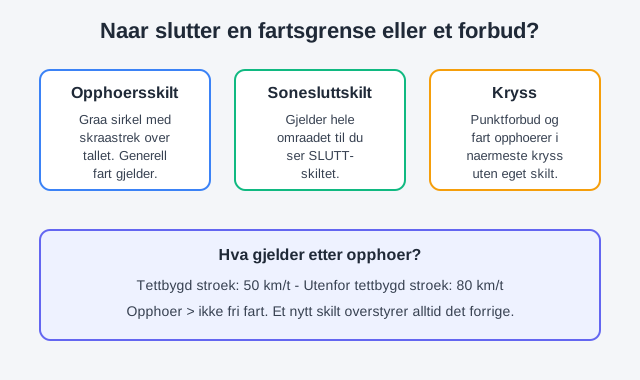
Table of contents
- What is an end-of-restriction sign?
- End of a speed limit
- Zone-end signs
- End of a prohibition zone
- When a junction ends a rule
- Common mistakes on the test
What is an end-of-restriction sign?
An end-of-restriction sign cancels an earlier sign. Most of these signs have a grey circle with a black diagonal line across the symbol or number they cancel. When you pass such a sign, the previous rule is no longer valid – but that does not mean the road is now free or that anything goes. Instead, the general rule for the place you are in applies.
There is a difference between an end-of-restriction sign and a new prohibition or mandatory sign. An end-of-restriction sign removes a limitation, while a new sign introduces one. You will find a thorough walkthrough of the prohibition signs themselves in the article on prohibition signs and what they mean .
End of a speed limit
When a speed limit is lifted without a new limit being signed, you fall back on the general speed limit for the type of road:
- 50 km/h in built-up areas
- 80 km/h outside built-up areas
This is closely tied to the rules for built-up areas and speed limits . A sign showing its own number in a grey circle with a diagonal line means that exactly that speed limit ends. You then have to judge for yourself which general limit applies onwards.
| Situation at the end of the limit | What applies next |
|---|---|
| End of speed limit in a built-up area | 50 km/h |
| End of speed limit outside a built-up area | 80 km/h |
| A new speed-limit sign is placed | The new signed limit |
| You pass a built-up-area sign | 50 km/h from the sign |
If you want to refresh the whole system of numbers and zones, take a look at the overview of speed limits in Norway and how variable speed limits work on electronic displays.
Zone-end signs
A zone covers a whole area, not just a single point. The most common example is a speed-limit zone, for example a residential zone with a low speed. A zone-start sign usually has the text SONE (zone) above the symbol, and the zone-end sign has a similar symbol with a grey strike-through and often the text SLUTT (end).
Inside a zone you do not need to see the sign itself at every junction – the limitation follows you through the whole area until you pass the zone-end sign. This differs from an ordinary sign, which in principle applies only from where it stands and ends at the nearest relevant junction.
End of a prohibition zone
Prohibitions can also apply as zones. A typical example is a parking zone or a zone where stopping is forbidden. They end like this:
- You meet a dedicated zone-end sign with a strike-through.
- The prohibition is replaced by a new, conflicting sign.
- You leave the area as the zone sign defines it.
The difference between stopping and parking matters here, and is explained further in the article on no-stopping versus no-parking . Remember that the end of a prohibition does not automatically grant you a new right – other rules in the area may still limit you.
When a junction ends a rule
Many prohibitions and speed limits that apply from a point end automatically at the nearest junction, without a dedicated end-of-restriction sign being placed. This does not apply to zones, which follow you through the whole area. On a priority road there are separate rules for how long the right of way lasts; read more about the start and end of a priority road .
It is also worth distinguishing between signs that regulate giving way and signs that regulate speed. A handy refresher is found in the comparison of stop and give-way signs .
Common mistakes on the test
The most common mistakes involve believing that the end of a limit means free speed, or forgetting that a zone continues past junctions. Remember:
- The end of a speed limit gives the general speed, not free speed.
- A zone applies until you see the zone-end sign.
- A point-based prohibition can end at the nearest junction.
- A new sign always overrides the previous one.
If you want to practise signs and end-of-restriction rules systematically, you can take a free theory test and then keep training in the Eteo app until you feel confident and ready for the theory test for class B.
Next step
Continue with free car questions
Go straight from the article to free car questions and check what actually sticks before you keep reading more theory.
Try for free