Petrol, diesel or electric – what suits a first-time car owner?
How to choose between petrol, diesel, hybrid and electric as a driver.
When you are new to the road and about to choose your first car, one question comes up fast: petrol, diesel or electric? There is no single right answer for everyone. The best drivetrain depends on how much and where you drive, whether you can charge, your budget, and what winter is like where you live. Here is an overview to make the choice easier.
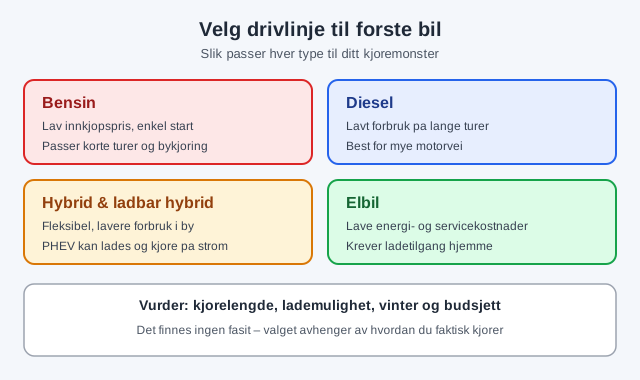
Table of contents
- The four drivetrains briefly explained
- Comparison of cost and use
- Winter performance and range
- How to choose the right drivetrain
- What does the choice mean for you as a driver?
The four drivetrains briefly explained
Even though the car market can feel overwhelming, most of it boils down to four main types:
- Petrol car – simple and cheap to buy, starts well in the cold and suits short trips and city driving. Consumption rises with a lot of stop-and-start city driving.
- Diesel car – low consumption on long trips and motorways, and a good fit if you drive many kilometres a year. Less favourable if you almost only drive short distances in town.
- Hybrid and plug-in hybrid (PHEV) – combines a combustion engine and an electric motor. A regular hybrid recharges itself while driving, while a plug-in hybrid can be charged from the grid and drive some distance on pure electricity.
- Electric car – runs only on electricity, has low energy costs and little maintenance, but requires that you have access to charging.
Comparison of cost and use
The table below gives a simplified overview. Remember that the actual figures vary a lot with model, driving style, and electricity and fuel prices.
| Drivetrain | Purchase | Energy cost | Maintenance | Best suited to |
|---|---|---|---|---|
| Petrol | Low | Medium–high | Medium | Short trips, city driving, low mileage |
| Diesel | Medium | Low per km on long drives | Medium | Lots of motorway and long trips |
| Hybrid/PHEV | Medium–high | Low–medium | Medium | Mixed driving, city and rural |
| Electric | High | Low | Low | Daily commuting with charging access |
For someone who has just passed their test, total ownership costs are often more important than the purchase price alone. Insurance, depreciation, tyres and service all matter. Read more about this in the guide to choosing your first car .
Winter performance and range
In Norway, winter performance is an important factor. Petrol and diesel cars are little affected by cold in terms of range, but a cold engine uses more fuel for the first few kilometres. Diesel cars may need extra heating in severe cold.
Electric cars, on the other hand, lose range in the cold, especially if you heat the cabin a lot. A heat pump reduces this loss considerably. To understand how cold affects an electric car, read about the electric car’s winter range and heat pump .
Whatever the drivetrain, winter tyres are crucial for safety. The type you choose matters a lot on slippery roads – see the comparison between studded and studless winter tyres . A plug-in hybrid also offers winter flexibility because you can switch between electricity and petrol; you can learn more in the article on PHEV driving modes and charging .
How to choose the right drivetrain
Ask yourself these questions before deciding:
- How far do you drive daily? Short city commuting points toward petrol or electric. Long daily trips may favour diesel or an efficient hybrid.
- Can you charge at home or at work? Without easy charging, an electric car is less practical, while a petrol car or hybrid is more flexible.
- What is your budget? A used petrol car is often cheapest to get started with, while an electric car can pay off over time thanks to low energy costs.
- What is winter like where you live? A lot of cold and long distances place different demands than mild city driving.
If you want a more general walkthrough of what to look for, the article on choosing a car is a good start. If you are also thinking about running costs, car economy and ownership is useful reading.
What does the choice mean for you as a driver?
The drivetrain itself does not change the traffic rules, but it affects how the car behaves. An electric car delivers strong acceleration instantly, which calls for a gentle right foot. A manual petrol or diesel car requires good clutch and gear technique, while automatic electric cars and hybrids make low-speed driving easier. Whatever you choose, it is good attitudes and knowledge of the rules that make you a safe driver.
Are you preparing for the class B theory test? Then it pays to practise regularly. You can take a free theory test and keep training in the Eteo app, so you are well prepared for the theory test – no matter which car you end up driving.
Next step
Continue with free car questions
Go straight from the article to free car questions and check what actually sticks before you keep reading more theory.
Try for free