Checking fluid levels in your car – oil, coolant and washer fluid
How to check oil, coolant and other fluids yourself.
Checking the fluid levels in your car is one of the simplest and most important things you can learn as a driver. You need neither tools nor a workshop to check oil, coolant, brake fluid and washer fluid – just a few minutes under the hood. Low or incorrect levels can lead to engine failure, poor braking or reduced visibility, so this is knowledge that belongs both in your licence training and in everyday use of the car.
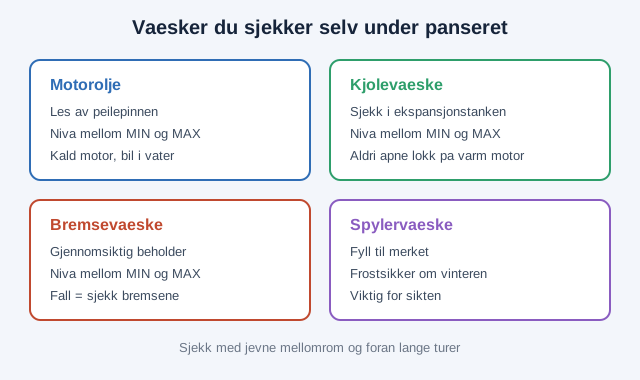
Table of contents
- How to check the oil level
- Coolant and frost protection
- Brake fluid and washer fluid
- Signs something is wrong
How to check the oil level
Engine oil lubricates the moving parts and prevents overheating. A low oil level is one of the most common causes of serious engine damage. Here is how to do it properly:
- Park the car on a flat surface so the reading is accurate.
- Wait until the engine is cold, or at least a few minutes after switching it off, so the oil drains into the sump.
- Pull out the dipstick (often with a yellow or orange handle), wipe it clean with a cloth, and push it all the way back in.
- Pull it out again and read the level. The oil should sit between the MIN and MAX marks.
If the oil is below MIN, top up with the same oil type the car uses – check the owner’s manual or the cap. Add a little at a time and measure again so you don’t overfill. On many newer cars the physical dipstick has been replaced by an electronic oil gauge in the instrument cluster menu. If your car warns of a low level, it is worth reading more about the engine and engine indicators .
Coolant and frost protection
Coolant keeps the engine at the right working temperature and contains antifreeze that stops the water freezing in winter. You check the level in the transparent expansion tank, which is also marked MIN and MAX.
Important: Never open the cap on a hot engine. The cooling system is under pressure, and you can be seriously scalded by steam and boiling fluid. Wait until the engine is completely cold.
The correct mix of antifreeze and water determines how low a temperature the coolant can withstand. If the level is repeatedly low, it may indicate a leak that should be checked at a workshop. You can read more about frost protection in the article on brake fluid and frost protection.
| Fluid | Where to check | Correct level | How often |
|---|---|---|---|
| Engine oil | Dipstick / electronic gauge | Between MIN and MAX | Every 2–4 weeks and before long trips |
| Coolant | Expansion tank | Between MIN and MAX (cold engine) | Monthly and before winter |
| Brake fluid | Reservoir in the engine bay | Between MIN and MAX | At service and at signs of a drop |
| Washer fluid | Washer tank | Up to the fill mark | As needed, more often in winter |
Brake fluid and washer fluid
Brake fluid transfers the force from the brake pedal to the brakes. The reservoir is usually transparent, so you can read the level without opening the cap. A falling level may be due to worn brake pads, but also a leak – in which case the brakes must be checked immediately. Brake fluid absorbs moisture and should be replaced at the intervals in the owner’s manual.
Washer fluid is underrated but vital for visibility. An empty tank on a winter day with road salt spray means, in practice, that you cannot see the road. Use frost-resistant washer fluid in cold periods, and fill up before long trips. Good visibility is a basic part of safe driving, just like understanding the gauges and warning lights in the car.
Checking these fluids fits naturally into the daily vehicle check before driving and into the regular maintenance of the car .
Signs something is wrong
Even if the levels look fine, watch out for these signals:
- The oil light comes on while the engine is running – stop and check the oil level as soon as possible.
- A spill under the car where it has been parked may indicate a leak of oil, coolant or brake fluid.
- Rising engine temperature may mean low coolant or a fault in the cooling system.
- A soft or sinking brake pedal is a serious warning – do not drive on without having it checked.
A low level that keeps coming back means the fluid is disappearing somewhere, and that must be investigated. The difference between topping up yourself and visiting a workshop often lies in whether the problem keeps recurring.
Want to test how well you know vehicle technique and control theory? Take a free theory test and keep practising in the Eteo app, so you are well prepared for the class B theory test.
Next step
Continue with free car questions
Go straight from the article to free car questions and check what actually sticks before you keep reading more theory.
Try for free