The engine warning light is on – what does it mean and what should you do?
What the engine warning light means and whether you can safely keep driving.
When the engine warning light comes on, it is easy to feel uneasy. The symbol, which often looks like a stylised engine, means that the car’s engine management has detected a deviation. The cause can be anything from a loose fuel cap to a serious fault. The most important thing is to read how the light behaves – its colour and whether it is steady or flashing – before you decide what to do.
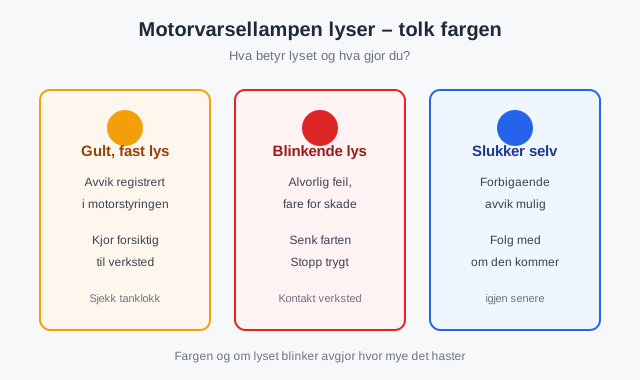
Table of contents
- What the engine warning light actually means
- Yellow versus flashing light
- Common causes
- Can I keep driving?
- How to find the fault
What the engine warning light actually means
The engine warning light (often called Check Engine) is linked to the car’s engine management system. The computer monitors sensors for fuel, ignition and emissions, among other things. When a value falls outside the normal range, the system stores a fault code and turns on the light to warn you.
The light therefore tells you that something is wrong, but not always exactly what. That is why you should interpret it together with other signals: is the engine running unevenly, is there a smell, or do you notice a loss of power? To understand the instrument panel better, the overview of gauges and warning lights is a good starting point, and you will find more on the engine-related symbols in the article on engine and engine indicators .
Yellow versus flashing light
The colour and behaviour determine how urgent it is:
| Light condition | Meaning | What you should do |
|---|---|---|
| Steady yellow light | Deviation detected, but not acute | Drive gently and have it checked soon |
| Flashing light | Serious fault, risk of damage to engine or catalytic converter | Slow down, stop safely and contact a workshop |
| Goes out by itself | Possible temporary deviation | Watch for it returning |
A yellow engine warning light that stays on steadily usually means you can keep driving with care, but the fault should be investigated. A flashing light is a clearer warning – often about misfires that can damage the catalytic converter – and here you should not keep stressing the engine.
Common causes
Many of the causes are undramatic, but some require quick action. The most common are:
- Loose or faulty fuel cap – lets false air into the system and can trigger the light.
- Faulty spark plugs or ignition coils – cause rough running and can make the light flash.
- Worn lambda (oxygen) sensor – affects fuel mixture and emissions.
- Fault in the catalytic converter or particulate filter – often after a lot of short trips.
- Sensor faults – for example the air mass meter or a temperature sensor.
After many cold starts and short trips in winter, moisture and incomplete combustion can also trigger the light. In some cases a longer run on the open road can then “burn off” the deviation. To learn more about how cold affects the car, see the article on maintaining a 12V battery if you also experience starting problems.
Can I keep driving?
The answer depends on how the light and the car behave:
- Steady yellow and the car drives normally: You can usually keep driving carefully, but book a workshop appointment.
- Steady yellow and the car jerks or loses power: Drive calmly to the nearest place you can get help.
- Flashing: Reduce your speed immediately and find a safe place to stop.
- On together with a red light (for example oil or temperature): Treat it as acute and stop as soon as it is safe.
Remember that an engine fault rarely stands alone. Check whether the warning lights for tyre pressure and brakes are also on, and check the fluid levels in the car such as oil and coolant before you drive on.
How to find the fault
To know what is actually wrong, you need to read out the fault code. This is done with an OBD code reader connected to the diagnostic port under the dashboard:
- A simple reader shows a code, for example P0420, that points to an area.
- Workshops use more advanced equipment that also shows live data.
- After repair the code can be cleared, and the light goes out if the fault is fixed.
You can read more about how this works in the article on the OBD code reader . If the car is due for its periodic technical inspection , be aware that an illuminated engine warning light can result in a remark or hold up approval, so it pays to fix the fault beforehand.
For driving-licence candidates it is worth noting that knowledge of warning lights and the car’s technical condition is part of the theory. If you want to practise exactly this type of question, you can take a free theory test and keep training in the Eteo app until you are confident and ready for the theory exam.
Next step
Continue with free car questions
Go straight from the article to free car questions and check what actually sticks before you keep reading more theory.
Try for free