When should you switch to winter tyres?
Timing, deadlines and temperature rules for switching to winter tyres.
Many drivers wonder when you should switch to winter tyres, and the answer is partly about the law and partly about common sense. The law sets no fixed calendar date for when you must have winter tyres on a passenger car, but it does require that the tyres always provide adequate grip for the conditions. In practice this means you must have changed before the first snow or ice arrives. In addition, separate date rules apply to studded tyres. This article explains the deadlines, the temperature rule and what is wise to do in good time.
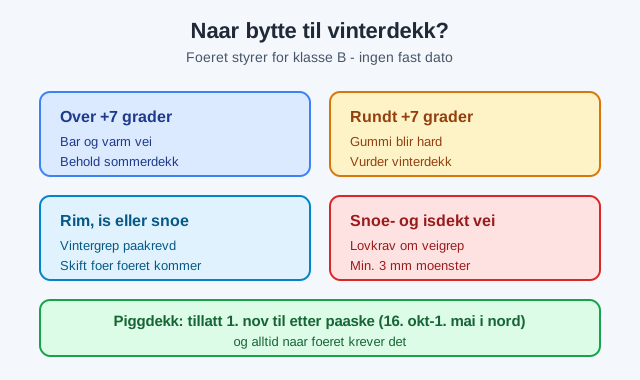
Table of contents
- What the law actually requires
- The temperature rule and the 7-degree tip
- Dates for studded tyres
- How to plan the tyre change
- Studded or studless?
What the law actually requires
There is no fixed date in the rules stating that passenger cars must have winter tyres on a given day. The requirement is functional: at all times the vehicle must have tyres suited to the conditions that provide adequate road grip for the situation. When the road is covered in snow or ice, the tyres must give enough grip to drive, brake and steer safely.
In practice this means it is your responsibility as the driver to have the right tyres before winter conditions arrive. If the first night brings frost, ice or snow and you still have summer tyres, you can both become a hazard in traffic and risk action from the police. Summer tyres must have at least 1.6 mm tread depth, while winter tyres must have at least 3 mm during the winter period. You can read more in our article on tyres and tread depth .
Heavier vehicles have their own, stricter date rules, but for an ordinary passenger car in class B it is the conditions that decide.
The temperature rule and the 7-degree tip
A practical rule of thumb many drivers use is the 7-degree rule. The rubber compound in summer tyres is made for warmer asphalt and becomes hard and stiff as the temperature drops. When the day steadily stays around or below +7 °C, winter tyres start to give noticeably better grip - even on bare, cold roads.
This is not a legal requirement, but a good sign that it is time to change. The table below shows the relationship:
| Temperature and conditions | Recommended tyre | Reason |
|---|---|---|
| Above +7 °C, bare road | Summer tyres | Best grip and least wear on warm asphalt |
| Around +7 °C or lower | Consider winter tyres | Summer rubber hardens and loses grip |
| Risk of frost, ice or snow | Winter tyres required | Conditions demand winter grip |
| Snow- and ice-covered road | Winter tyres required | Legal requirement for adequate grip |
Remember that temperatures are often lower in the morning, in shade, on bridges and at altitude. It may be above zero with a bare road where you live, yet icy on a shaded hill a few kilometres away. Read more about spotting dangerously slippery roads in the article on visibility requirements in snow and ice .
Dates for studded tyres
While winter tyres have no fixed date, studded tyres do. Studded tyres are only permitted during a specific winter period, and outside that period they are banned unless the conditions are genuinely wintry.
- In the south of the country, studded tyres are normally permitted from 1 November until the first Sunday after Easter Monday.
- In the three northernmost counties the period is longer, from 16 October until 1 May.
- Regardless of the date, studded tyres are always allowed when the conditions require it - that is, in snow or ice.
Many municipalities have also introduced a studded tyre fee to reduce airborne dust in towns. You can read more about the rules in rules for tyres and chains and in the overview of winter tyres and chain use for class B.
How to plan the tyre change
Do not wait for the first snowstorm - that is when everyone queues at the tyre workshop. Here is how to do it smartly:
- Watch the long-range forecast as daytime temperatures approach +7 °C.
- Book early if you do not change tyres yourself. The first frosty nights fill the workshops fast.
- Inspect the tyres for tread depth, age and any damage before fitting them.
- Check the tyre pressure after fitting and adjust to the car’s specifications.
- Store the summer tyres correctly - dark, dry and standing or lying down depending on type. See tyre storage and tyre hotels .
A good tip is to change while it is still bare and light outside. Then you avoid fitting tyres in cold, snow and darkness.
Studded or studless?
When you do change, you must choose a type of winter tyre. Studded tyres give the best grip on glassy ice, while modern studless winter tyres are excellent and cause less road wear and noise. The choice depends on where you live and how much you drive on ice. You can find a more thorough comparison in the article on studded versus studless winter tyres .
Whatever you choose, the requirement of at least 3 mm tread depth for winter tyres applies, and the tyres must provide adequate grip for the conditions.
Understanding tyre rules and winter driving is an important part of the class B theory test. Want to test yourself? Take a free theory test and keep practising in the Eteo app, so you are well prepared for both the theory test and your first winter behind the wheel.
Next step
Continue with free car questions
Go straight from the article to free car questions and check what actually sticks before you keep reading more theory.
Try for free