Studded vs studless winter tyres – which should you choose?
How to choose between studded and studless tyres for your winter driving.
When winter arrives, you have to decide which tyres your car will run on. The choice between studded and studless winter tyres comes down to where you live, the road conditions you meet most often, and what costs the most over time. Both types are approved for winter use in Norway, but they behave differently on ice, snow and bare roads. Here is a clear comparison so you can choose the right tyre for your winter driving.
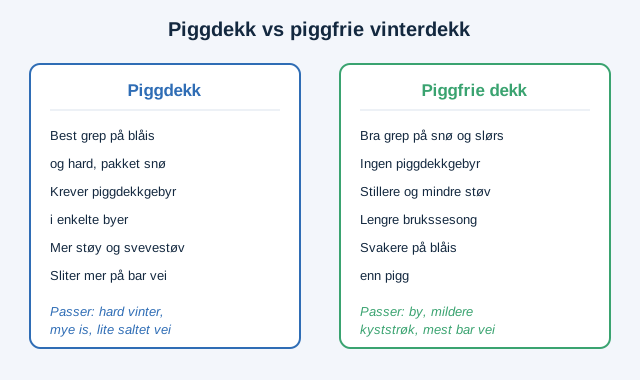
Table of contents
- What sets studded apart from studless tyres
- Grip on different surfaces
- Studded-tyre fee and the environment
- Cost and lifespan
- How to choose right
- Practise the theory
What sets studded apart from studless tyres
Studded tyres have small metal studs that bite into ice and hard-packed snow. Studless winter tyres (also called friction tyres) instead use a soft rubber compound and a tread with many sipes that provide grip without studs. Both are genuine winter tyres – it is important to distinguish them from summer tyres and from so-called all-season tyres, which are rarely good enough for a Norwegian winter.
A good starting point is understanding how the tyre itself works. Read more in the article on winter tyres and chain use and about the requirements in rules for tyres and chains .
Grip on different surfaces
Which tyre gives the best grip depends heavily on the surface:
- Glazed ice and hard-packed snow: Studded tyres have a clear advantage because the studs tear up a rougher surface.
- Loose snow and slush: Studless tyres work very well, often just as well as studded ones.
- Bare, wet asphalt: Studless tyres tend to give shorter braking distances and less restlessness, since the studs have nothing to bite into.
- Changing conditions in the city: Studless tyres are often the most practical when roads are salted and partly bare.
Whatever the tyre type, driving technique is decisive. Gentle throttle, good following distance and calm movements matter more than the tyre choice alone. See the practical advice in driving on slippery roads.
Studded-tyre fee and the environment
In several Norwegian cities you have to pay a studded-tyre fee if you drive on studded tyres during the winter season. The scheme exists partly to reduce airborne dust, which the studs tear loose from the asphalt. You can pay per day, per month or for the whole season, and the rules vary from city to city. If you live in an area with such a charge and mostly bare, salted roads, studless tyres may be both cheaper and more environmentally friendly.
| Property | Studded tyres | Studless tyres |
|---|---|---|
| Grip on glazed ice | Best | Good, but weaker |
| Grip on loose snow | Good | Good |
| Braking on bare road | Slightly longer | Slightly shorter |
| Studded-tyre fee in some cities | Yes | No |
| Airborne dust and road wear | More | Less |
| Noise level | Higher | Lower |
Cost and lifespan
The purchase price itself is often fairly similar between the two types. The difference lies in usage:
- With studded tyres, the studded-tyre fee can add a fixed annual cost in certain cities.
- Studless tyres can often be used a little further into spring and autumn without breaking the law, because you do not have to account for studs.
- Both types must be replaced when the tread depth gets too low, and stored correctly between seasons.
Always check the wear before winter. Learn how in tyres and tread depth , and read about safe storage in tyre storage and tyre hotels .
How to choose right
As a simple rule of thumb:
- Choose studded tyres if you live where winter is long and hard, with lots of ice and little salted road.
- Choose studless tyres if you drive mostly in the city or milder coastal areas with plenty of bare, salted asphalt.
- Think about when you actually change tyres; see when to switch to winter tyres .
Remember too that airborne dust from studs is a real environmental topic in cities. More on this in studded tyres and airborne dust .
Practise the theory
Tyre choice, winter conditions and grip are classic topics on the theory test. Test yourself with a free theory test and practise regularly in the Eteo app, so you are confident and ready for the class B theory test.
Next step
Continue with free car questions
Go straight from the article to free car questions and check what actually sticks before you keep reading more theory.
Try for free