Scraping windows and clearing snow from the car – correct and legal
Requirements and technique for scraping windows and clearing snow before you drive.
Scraping the windows and clearing snow from the car is something you have to do every morning in winter – and it is not just good practice, it is a legal requirement. As the driver you are responsible for having a clear view in all directions and for keeping the vehicle visible to others. If you drive off with ice on the windows or a load of snow on the roof, you risk a fine, reduced visibility, and the snow sliding down to block your windscreen or the car behind you.
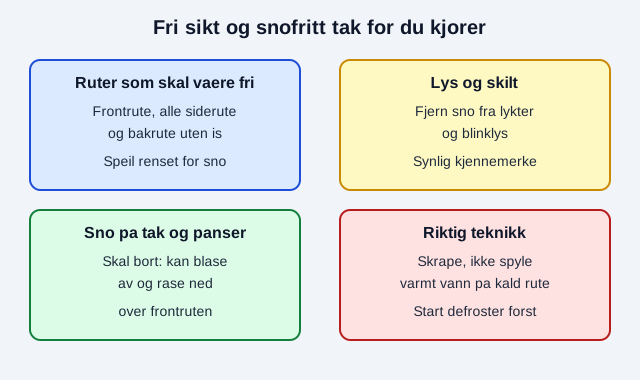
Table of contents
- What the law requires for visibility
- How to scrape ice the right way
- Snow on the roof – why it is dangerous
- Lights, mirrors and number plate
- Common mistakes and good routines
What the law requires for visibility
As the driver you have a duty to have a clear view and to keep the vehicle in a safe condition before you set it in motion. In practice that means all ice and snow blocking your view must be gone before you drive – not just a small peephole in the windscreen.
| Part of the car | Requirement before driving |
|---|---|
| Windscreen | Completely clear of ice and snow |
| Side windows | Clear enough for side checks and mirror use |
| Rear window | Clear of ice and snow |
| Mirrors | Brushed off and de-iced |
| Lights and indicators | Visible and clean |
| Number plate | Legible, not covered by snow |
| Roof, bonnet and boot lid | Snow removed |
It is tempting to “let it warm up” and drive with a small opening, but that is neither legal nor safe. Lack of visibility is a known cause of winter accidents, and the topic comes up often on the theory test. Read more about the rules in the article on visibility requirements in snow and ice .
How to scrape ice the right way
Good ice scraping is about both technique and a little patience. Start the engine and turn on the heat first, so you work “from the inside out” as the window warms up.
- Turn on the defroster and fan towards the windscreen as soon as you get in.
- Let the engine run while you scrape – the heat loosens the ice from below.
- Scrape the whole window, not just a patch in front of the wheel. Do the side windows and rear window too.
- Use a good ice scraper with a firm blade. Avoid short, hard strokes that scratch the glass.
- Brush or sweep away loose snow before scraping the ice underneath.
Never pour boiling or hot water on a cold window. The rapid temperature difference can crack the glass. Use winter-grade washer fluid that does not freeze instead. How to best use the heat and the defrost function is described in the guide to correct use of the defroster and heat and in the article on demisting and visibility .
Snow on the roof – why it is dangerous
Many people scrape the windows but forget the snow on the roof. That is one of the most dangerous mistakes in winter. When the car gains speed or you brake, the snow load can:
- Slide down over the windscreen and block your view completely at a critical moment.
- Blow off at speed and hit the car behind you like a hard slab of ice.
- Fall over the lights and number plate, making you less visible.
Snow and ice falling off a moving vehicle can pose a real danger to other road users, and as the driver you are responsible for the load – including the snow. Use a long snow brush and gently pull the snow off the roof, bonnet and boot lid. It takes half a minute and can save you and others from a serious situation.
Lights, mirrors and number plate
To be seen in winter darkness, the lights must be free of snow and ice. A thin layer of ice or a clump of snow in front of a light reduces its brightness significantly. So check:
- Front and rear lights
- Indicators front and rear
- Brake lights and fog lights if you use them
- That the number plate is legible
The mirrors must also be brushed off and de-iced so you can use them actively. If the mirrors mist up on the inside while driving, you will find tips in the article on condensation on the inside of the car . If the wipers do not work as they should, read about windscreen wipers and washers before you set off.
Common mistakes and good routines
The typical mistakes are scraping too little, forgetting the roof, and driving off with condensation and ice still covering part of the window. Set aside a few extra minutes and make de-icing a fixed routine, ideally as part of the wider winter preparation before driving on ice .
Choosing the right tyres is part of the same whole. Consider what suits you in the article on studded versus stud-free winter tyres , and find out when you should switch to winter tyres . Remember too that slippery, snow-covered roads can hide black ice that is hard to see .
Visibility is a topic you are almost guaranteed to meet on the test. Test yourself with a free theory test and practise in the Eteo app until you feel confident and ready for the theory test.
Next step
Continue with free car questions
Go straight from the article to free car questions and check what actually sticks before you keep reading more theory.
Try for free