Black ice – how to recognise and handle it
Where black ice forms, how to spot it and how to drive safely.
Black ice – how to recognise and handle it
Black ice is a thin, transparent layer of ice that settles on the asphalt and is almost impossible to see, because it mirrors the dark road surface underneath. It gives you some of the worst grip you can encounter, and it tends to appear exactly where you least expect it. If you are preparing for the class B theory test, it is important to understand where black ice forms, how to read the warning signs, and how to recover the car if it does start to slide.
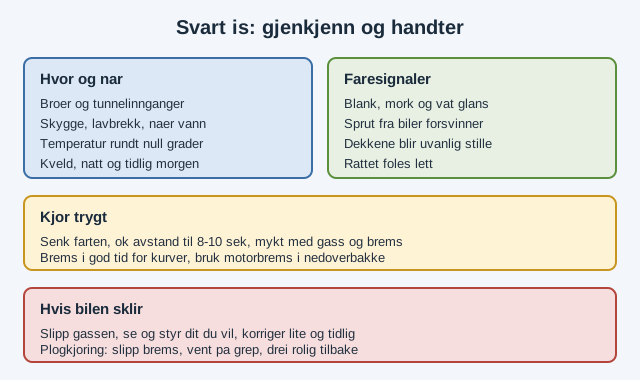
Table of contents
- What black ice is, and why it is so dangerous
- Where and when black ice forms
- How to spot black ice in time
- How to drive safely on black ice
- What to do if the car loses grip
What black ice is, and why it is so dangerous
Black ice forms when a thin film of water or moisture freezes into a glass-clear layer on the road. The layer is so thin and shiny that it does not look white the way snow and frost do – instead, the black asphalt shines through the ice. The result is that friction can drop to roughly one tenth of what you have on dry asphalt.
The greatest danger lies precisely in the fact that the ice is almost invisible. You drive in good faith over what looks like bare road, and only notice the problem once the tyres have already lost their grip. That is why safe winter driving is more about anticipating than reacting.
Where and when black ice forms
Black ice follows a few predictable patterns. It forms most easily when the temperature is around zero degrees, typically in the evening, at night or early in the morning, and especially where the road is damp and cold air gathers.
| Location | Why it is exposed |
|---|---|
| Bridges and viaducts | Cold air circulates both above and below, so they freeze first |
| Tunnel entrances | Seeping water and temperature shifts create a slippery surface |
| Shaded sides and forest stretches | The sun never dries out the road |
| Dips and the bottom of hills | Cold, damp air collects in hollows |
| Roads near water and bogs | High humidity freezes quickly on the surface |
Be especially alert in the transition between mild weather and frost. A road that has been wet all day can turn mirror-slick within a few minutes when evening comes and the temperature drops below zero.
How to spot black ice in time
Even though black ice is hard to see, there are clear warning signs you can train yourself to read:
- The thermometer in the car shows a temperature around or below zero degrees.
- The road changes colour – from matte grey asphalt to a shiny, dark and “wet” gloss.
- The spray from cars ahead suddenly disappears, even though the road looks damp.
- The car becomes unusually quiet because the tyres roll on smooth ice instead of rough asphalt.
- The steering feels “light” and gives little feedback.
Build a mental model of your grip before you press the accelerator, as we describe in the article on tyre grip . When you combine observation with systematic scanning, you spot hazard zones while you still have time to react.
How to drive safely on black ice
The most important rule is simple: reduce your speed and increase your following distance well before you reach the hazard zone. On black ice the braking distance can multiply many times over, and the only antidote is time and space.
- Keep a steady, low speed and avoid all abrupt movements of the wheel, accelerator and brakes.
- Increase your following distance sharply – where you would normally use 3 seconds, you should have at least 8–10 seconds.
- Brake in good time before bends and junctions, never in the middle of a turn.
- Use engine braking downhill instead of pressing hard on the foot brake.
- Be gentle on the accelerator when starting off, so the drive wheels do not spin.
You can read more about how to adapt your speed and steering in driving on slippery roads and in the guide on speed and distance . Remember too that the right tyre choice is a precondition for grip – read about studded versus studless winter tyres .
What to do if the car loses grip
Even with all caution, the car can begin to slide. Then calm, small corrections are key – panic makes everything worse.
| Situation | What to do |
|---|---|
| The rear end slides out | Ease off the accelerator gently, look and steer where you want to go, correct little |
| The front wheels plough out of the bend | Ease off and brake for a moment, wait for grip, then steer back gently |
| The car slides straight towards an obstacle | Release the brake fully to regain steering, seek friction at the edge |
Modern cars have electronic aids that can dampen an incipient skid. Read how in the article on electronic stability control (ESC) . Remember, though, that electronics cannot override physics – they only help within the limits set by friction. For more practice on difficult surfaces, see driving under difficult conditions .
Ready for the theory test
Black ice comes up as a topic both in the theory and in practical driving, and questions about slippery roads, braking distance and risk are common. If you want to test yourself, you can take a free theory test and keep practising in the Eteo app until you are confident and ready for the theory test. Those who understand black ice before it appears drive most safely – both on the test and on the road.
Next step
Continue with free car questions
Go straight from the article to free car questions and check what actually sticks before you keep reading more theory.
Try for free