Aquaplaning (hydroplaning)
What aquaplaning is, why it happens and how to avoid it. Practical tips, tables and illustration for safe driving in rain.
Aquaplaning (hydroplaning) occurs when the tire loses contact with the road because a layer of water builds up under the wheel. The result is a dramatic loss of steering and braking ability.
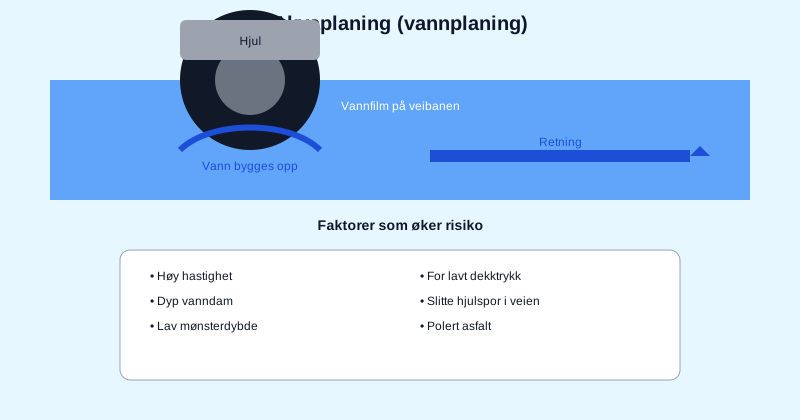 For general driving in rain and wet conditions, see Driving in difficult conditions
.
For general driving in rain and wet conditions, see Driving in difficult conditions
.
When does aquaplaning occur?
| Factor | How it affects risk | Action |
|---|---|---|
| Speed | High speed increases water pressure ahead of the tire | Reduce speed early |
| Water depth | > 5 mm increases risk markedly | Avoid deep puddles |
| Tread depth | < 3 mm gives high risk | Replace tires in time |
| Tire pressure | Too low pressure increases risk | Adjust to correct pressure |
| Road profile | Ruts, polished asphalt, crossfall | Stay in established wheel tracks |
Critical speed (simple rule of thumb)
| Tread depth | Water depth | Critical speed |
|---|---|---|
| 7–8 mm | 3–4 mm | 90–100 km/h |
| 4–5 mm | 3–4 mm | 70–80 km/h |
| 3 mm | 5 mm | 55–65 km/h |
| 2 mm | 5 mm | 45–55 km/h |
| Values vary with tire design, vehicle weight and pressure. Treat as guidance, not absolutes. |
How to prevent aquaplaning
- Reduce speed by 20–30% in heavy rain
- Increase following distance substantially
- Follow established wheel tracks
- Avoid abrupt maneuvers and large steering inputs
- Check tread depth and tire pressure regularly
- Replace wiper blades often for maximum visibility For distance planning in rain, see Speed and distance .
What to do if you hydroplane
- Hold the wheel straight and steady
- Ease off the throttle gently
- Do not brake hard and do not steer sharply
- Wait until grip returns before adjusting course or speed
Tire checkpoints
| Item | Minimum | Recommended |
|---|---|---|
| Tread depth | 1.6 mm legal minimum | 3–4 mm summer, 4 mm winter |
| Tire pressure | Manufacturer spec | +0.2 bar with heavy load |
| Rotation | Even wear | Swap front/rear every 10,000 km |
| See also Rules for tires and chains . | ||
| Read more about pressure and monitoring in Tire pressure and TPMS . |
Related articles
Next step
Continue with free car theory questions
Go straight from the article to free car theory questions and check what actually sticks before you keep reading more theory.
Try for free