Bus at a stop – passing and give-way
Handle bus stops safely - give-way duties, overtaking, passenger care and positioning.
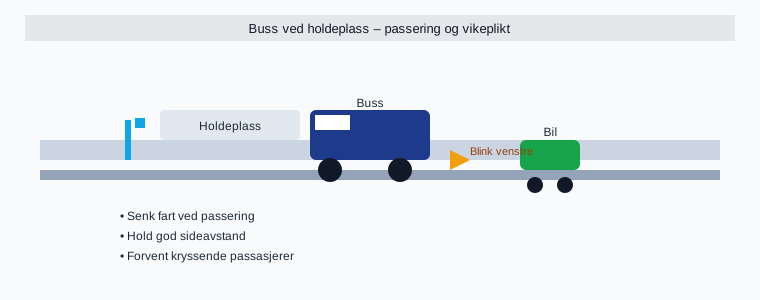
In built-up areas with a speed limit of 60 km/h or lower you must let the bus re-enter the lane when it signals that it is leaving the stop and you can do so safely. On faster roads the bus keeps its formal give-way duty, yet you must still adapt speed and position so the manoeuvre can be completed without risk.
Speed limit and duties
| Speed/area | Your duty | Bus duty | Related rules |
|---|---|---|---|
| Built-up ≤ 60 km/h | Allow the bus to merge when it signals and starts moving, unless it creates danger | Signal clearly and make sure the merge is safe | Stopping rules |
| Roads > 60 km/h | Adjust speed and create space; let the bus in when conditions allow | Must give way when leaving the stop | Give-way and roundabouts |
| Bus lanes | Follow lane rules and keep the lane clear for scheduled buses | Wait until the lane is free | Bus lanes – rules and use |
Before you pass the stop
- Slow down early and scan for crossings, driveways and cycle lanes.
- Check supplementary plates with time windows or vehicle types, see Information signs .
- Keep a line that allows an escape if the bus or passengers move unpredictably.
- Increase distance in rain, snow or darkness – passengers may stumble into the lane.
When the bus signals departure
- Notice the indicator and assess whether you can let the bus out safely.
- Check mirrors and blind spots before you reduce speed.
- Create room by easing off the accelerator rather than accelerating past.
- Communicate with steady speed and lane position so the driver understands your intent.
- Resume speed only after the bus is fully in the lane.
Read more about co-operating with public transport in Road user groups and care .
Safe passing alongside a bus stop
| Situation | Action |
|---|---|
| Bus is stationary | Pass slowly with ample lateral clearance and ready braking |
| Doors close | Increase the gap and expect the bus to move off |
| Passengers crossing | Be prepared to stop instantly; watch both sides of the bus |
| Stop near a junction or crossing | Avoid overtaking and follow the lane markings |
Parking and stopping rules around stops are covered in Parking rules .
Signalling and communication
- Use indicators early if you need to change lane around the bus.
- Maintain steady spacing so passengers feel safe while boarding or exiting.
- Avoid using the horn unless necessary to prevent danger.
- Eye contact with the driver helps—support it with clear speed adjustment.
Common mistakes
- Accelerating past just as the bus moves off and creating conflict.
- Leaving too little room in bad weather so passengers step into the lane.
- Blocking a bus lane near the stop and preventing departure.
- Ignoring flashing warning lights on school buses—always stop until children are safe.
Related topics
Next step
Continue with free car theory questions
Go straight from the article to free car theory questions and check what actually sticks before you keep reading more theory.
Try for free