OBD-II code reader - use and limitations
Understand what an OBD-II code reader does, how to read codes safely and where the tool reaches its limits.
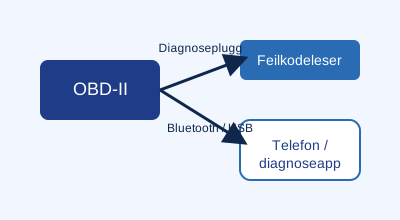
An OBD-II code reader unlocks diagnostic data from the vehicle. Used correctly it explains why the check-engine light is on, helps you plan workshop visits and prevents knock-on damage. For the dashboard context, read Gauges and warning lights .
What is OBD-II?
| Item | Explanation |
|---|---|
| Standard | Mandatory on petrol cars from 2001 and diesel cars from 2004 |
| Connector | 16-pin diagnostic plug, usually under the dashboard |
| Data | Diagnostic trouble codes (DTC), live sensor data and freeze frames |
OBD-II codes contain one letter plus four digits. The prefix shows the system:
| Prefix | System | Examples |
|---|---|---|
| P0xxx | Powertrain | Misfire, lambda sensor, pressure sensor |
| C0xxx | Chassis | ABS wheel speed, steering angle |
| B0xxx | Body | Airbag, HVAC |
| U0xxx | Network | CAN communication, module fault |
When should you read codes?
- When the check-engine light stays on or flashes
- After a repair to confirm the fault is resolved
- Before buying a used car to spot stored faults
- Ahead of the roadworthiness test to check emissions-related codes
Troubleshooting workflow
- Connect the reader with the ignition off.
- Switch the ignition on and pair via cable, Bluetooth or Wi-Fi.
- Read active and stored codes and note freeze-frame data.
- Look up the codes in manufacturer resources or trusted databases.
- Inspect wiring and sensors before clearing any codes.
- Test-drive and verify that the lamp and codes do not return.
For engine warnings, see Engine lights and indicators .
Limits and pitfalls
- Budget readers may only show generic P0 codes.
- Many apps cannot access manufacturer-specific modules or live data.
- Clearing codes without solving the cause can hide serious issues.
- Workshops can detect cleared codes through histories stored in control units.
Legal and practical notes
- Do not erase codes to hide faults before a vehicle sale; that can be illegal.
- Sharing vehicle data with cloud services requires consent, see Dashcam and privacy .
- Keep your own documentation of diagnostics if you rely on factory warranty coverage.
Related reading
Next step
Continue with free car theory questions
Go straight from the article to free car theory questions and check what actually sticks before you keep reading more theory.
Try for free